Table of Contents
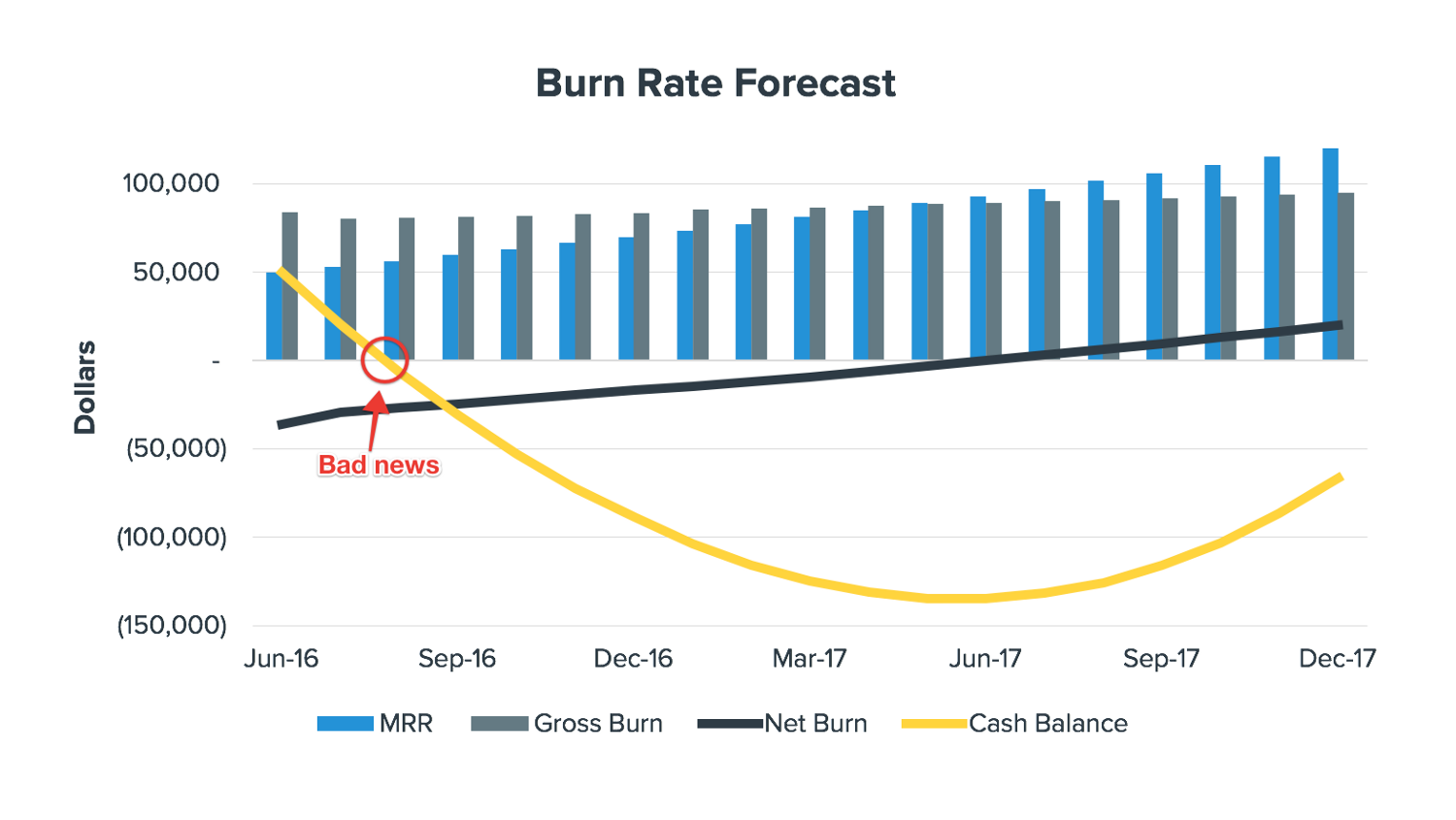
Cash flow is a major factor in whether or not a business will succeed, and lack of cash flow is why 82% of businesses shut their doors for good.
Understanding your business's cash burn rate is essential for keeping your bank account positive and, ideally, with plenty of cash flow opportunities for maneuverability.
Let’s look at everything you need to know about your burn rate, including why burn rate matters, how to calculate burn rate, and how to know if your current burn rate will work for you.
You can see how we populate Burn Rate stats in our demo Baremetrics dashboard.
What is Burn Rate?
Burn Rate measures how quickly your cash holdings decrease, meaning it is a negative metric. Businesses, startups, in particular, need to be mindful of the burn rate, as it can quickly escalate and lead to business failure and bankruptcy. You'll always have to spend money, but minding that amount is crucial to long-term success.
A practical example of burn rate is how quickly your business spends cash reserves to cover overhead costs. It accounts for how much money you have on hand and what you’re spending, and it’s a good way to spot potential cash flow issues before they become a serious problem.
As this is an important metric, many companies monitor their monthly and quarterly burn rates.

What is the Formula for Calculating Burn Rate?
Burn Rate, or net burn rate, refers to the amount of money a company loses each month. Burn rate is calculated by subtracting total revenue from total expenses in a given period (usually a month). Or, use this net burn rate formula:
Sum of expenses - Sum of Revenue = Net burn rate
To calculate gross burn rate, simply add up your expenses for the time period in question (often a month). Or, use this gross burn rate formula:
Sum of expenses = Gross burn rate
Burn Rate Example
Here’s an example of how burn rates work:
- Your total fixed and variable monthly costs are $80,000
- Your cash reserves for this month are $750,000
- Your Monthly Recurring Revenue is $50,000
- So your gross burn is $80,000 (Total Monthly Expenses)
- Your net burn is $30,000 (Revenue - Expenses)
- With this information, you can calculate your runway in months (Cash runway = total cash reserves ÷ average monthly net burn), or in this case, 750,000 ÷ 30,000 = 25 months
- Bottom line: You’re “burning” $30K more per month, and you can calculate that you have 25 months to zero cash day, provided you don’t increase revenue, reduce expenses or get new investments.
Gross Burn Rate vs. Net Burn Rate: What’s the Difference?
There are two different types of burn rates to consider: Gross burn rate and net burn rate.
Your gross burn rate is the total cash you spend each month.
Your net burn rate, on the other hand, is the difference between the cash you’ve brought in and the cash you’ve spent.
Both metrics matter, even though the net burn rate is arguably more important.
Gross burn rate can help you monitor how much you’re spending (and how quickly you’re doing it) over a specific period. This can be helpful to track and compare to other months or quarters.
Your net burn rate gives you an exceptionally valuable look into how much cash you’re burning compared to existing reserves and what you’re bringing in, which can be used in the assessment to determine whether you’re on a course toward growth or cash flow issues.
Run Rate vs. Burn Rate: What’s the Difference?
Run rate and burn rate are metrics that compare how money is spent to cash reserves, but they do so differently.
As we now know, your burn rate tells you how quickly you spend cash compared to the cash you have and are earning.
Your run rate, on the other hand, uses current financial information to forecast your financial performance. It assumes that your financial information will stay consistent when predicting future performance.
In simple words: Burn rate measures negative cash flow while run rate estimates a company’s annual revenue.

Why Burn Rate Matters
Burn rate matters because it helps you track your cash flow. You must be in the negative to be profitable.
While it’s not unusual for businesses to occasionally have a positive (above 0) monthly burn rate, this should only happen once in a while due to a significant expense or investment. You need more negative burn rate months than positive.
Measuring your burn rate regularly can help you forecast when you’ll run out of funds or even when you can invest in expansion and growth opportunities.
For this reason, investors often look at the burn rate of existing companies, and it can be an important factor in their decision about whether or not to invest with you or what the terms may be.
What Investors Consider
Most startups want to keep close to a year of runway available at all times. If you’re under 6 months away from Zero Cash Day, you should be looking to cut costs dramatically or raise funding.
VCs will look at your burn rate when raising funding to determine how quickly you’ll spend their investment capital. For example, if you’re only burning $100k a month and want to raise $5 million, it would take you 4 years to spend all that cash. Why raise so much now? What’s going to change?
Unfortunately, cash doesn’t tend to stay in the bank for long. Mark Suster, Managing Partner of Upfront Ventures (the largest venture capital firm in Los Angeles), suspects that most startups will spend any VC money within 12 – 18 months of investment. If you’ve got money, you want to spend it.
And if the market is good, more investment is available and you’re growing quickly (50-75% annually) it’s “worth it” to keep that burn rate high.
But if your growth isn’t matching the money you’re spending, you’ll quickly be in a bad situation. Runway will decrease, investors won’t be as keen, and you’ll need to make changes to stay sustainable.
What’s A “Good” Burn Rate?
A “good” burn rate is highly variable, so there’s no easy answer except for this: Any burn rate that allows you to grow and expand over time is considered a good burn rate.
Some industries will have much higher burn rates than others. Those with high overhead costs and expenses (like those in the hospitality or eCommerce industries) will have higher burn rates on average than those with much lower expenses (like a fully remote digital marketing agency, for example).
If your cash flow is positive and can account for unexpected expenses and, ideally, growth, that’s a good place to be.
Final Thoughts: Tips for Managing Your Burn Rate
Managing your burn rate can help you increase your likelihood of being on a solid track toward long-term growth and success.
To manage and improve your burn rate, consider the following tips:
- Account for unexpected costs. You don’t want to be just at the point of profitability that a huge unexpected expense like legal fees, a slight bump in the economy, or an increase in raw materials could cost you the business. Having enough wiggle room in the budget can be essential.
- Track fixed and variable costs regularly. Fixed costs are the same month-over-month for a set time period; variable costs fluctuate based on sales, production, and manufacturing volume. Account for both to make financial decisions throughout the month.
- Find ways to reduce overhead costs. Negotiating with (or changing!) suppliers can sometimes make a huge impact. Cutting back on tools you don’t need, considering third-party contractors instead of full-time workers, and even downsizing an office can make a huge impact.
- Invest in financial reporting analytics tools. Tools like Baremetrics can give you a complete understanding of what’s happening with your business’s finances. This can help you make smarter decisions to improve your burn rate.
Want to gain insight into your business’s financial standing AND optimize it? Measure the difference with subscription analytics by Baremetrics.